This text is part of an experiment I undertook with Ben Guzovsky; the cited texts are mine, but the material linking those citations is not. If you have landed on this page directly, click here for an introduction and a little context. Thank you! —DGB
Where “Attention Span” Came From, and Why the Goldfish Is a Myth
The “attention span” began in the 1880s as a measure of how many things a person could take in at a single glance. Only later, in wartime radar research, did it become a question of how many minutes a person could stay on task. Historian D. Graham Burnett argues that the number we now worry about was built to measure something narrow, and that the goldfish comparison attached to it is a myth.

The goldfish and the complaint
Burnett and his co-authors Alyssa Loh and Peter Schmidt open their 2026 New York Times essay with the complaint, and the fish:
In our anxious age, increasing attention is being directed to our attention, and to the extraordinary and seemingly inescapable forces trying to exploit it. In one recent survey, 75 percent of respondents said they have some kind of attention problem… There must be a thousand and one articles asserting that the human attention span has dipped below that of the small, orange carp known as the goldfish, which for some reason has come to serve as the interspecies benchmark of distractibility. Goldfish themselves seem to be doing fine, but here on dry land, about 11 percent of American children have been diagnosed with A.D.H.D.
— D. Graham Burnett, Alyssa Loh, and Peter Schmidt, “The Multi-Trillion-Dollar Battle for Your Attention Is Built on a Lie”, The New York Times, 2026
The goldfish line is not just internet folklore. The advertising industry repeats it. When The New Yorker’s Nathan Heller reported on the attention business in 2024, Mastercard’s chief marketing officer told him that consumer attention now lasts “less than eight seconds,” and then made the comparison: “less than the attention span of a goldfish.” The comparison went viral in May 2015, when Time ran the headline “You Now Have a Shorter Attention Span Than a Goldfish,” citing a Microsoft Canada marketing report. The report’s eight-second and nine-second figures were not its own research; they came from a statistics website, Statistic Brain, that cited no traceable study of fish or people.
There is real research on screens. The psychologist Gloria Mark found that in 2004 people held their attention on one screen for about two and a half minutes before switching, and that today the average is about forty-seven seconds. Where did the habit of measuring attention this way come from?
The first attention span measured space, not time
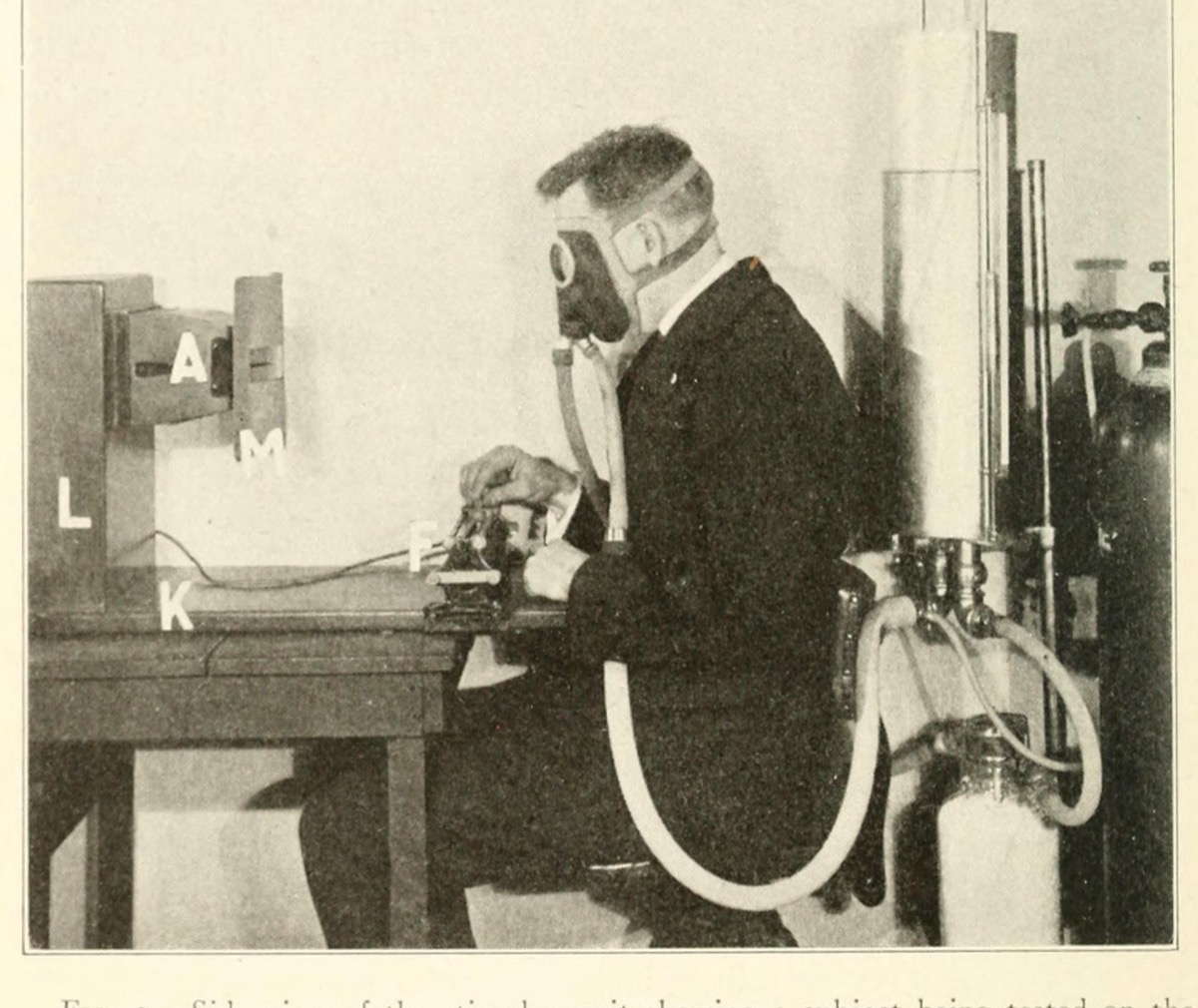
The phrase goes back to James McKeen Cattell, whom the Times essay calls “the first professor of psychology in the United States.” At the University of Pennsylvania in the 1880s, Cattell “used a fast-snap shutter to flash a few letters” for a fraction of a second, then asked subjects to repeat as many as they could. From the spread of results he concluded that he was measuring “a significant feature of cognitive ability,” which he named the “span” of attention.
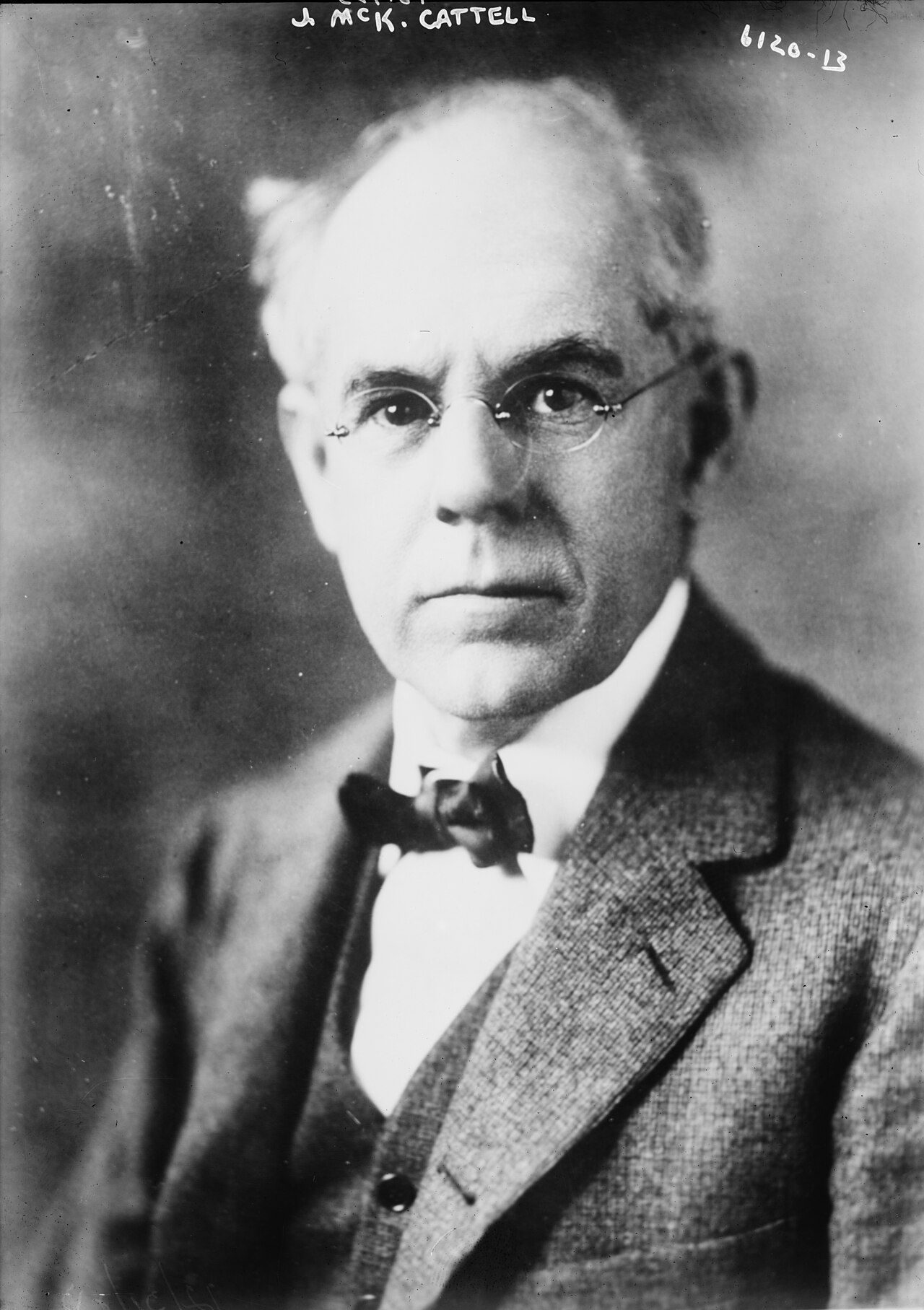
That span was a matter of space. In the essay’s words, Cattell’s question was “How many objects could a person take in at a glance?” The Friends of Attention make the same point in their 2026 manifesto:
In fact, earlier in the twentieth century the notion of an “attention span” referred not to duration, but to the actual visual field in which a stimulus might appear—it was spatial.
— Friends of Attention, “Machinic Attention and Its Adversaries: A Manifesto”, e-flux, 2026
Once attention had a number, the Times essay continues, it could be graded:
Subsequent researchers used the attention span metric to identify children’s mental “deficiency.” Still other scientists began looking for daily attention patterns. The quantitative study of human attention had begun, and with it a pervasive program to sort and grade and optimize our attentive capacities, as measured while sitting in front of screens.
— D. Graham Burnett, Alyssa Loh, and Peter Schmidt, “The Multi-Trillion-Dollar Battle for Your Attention Is Built on a Lie”, The New York Times, 2026
How the span became a stopwatch
The idea of attention as a duration came from war. The Times essay tells the story of the British psychologist Norman Mackworth:
In 1940, as the Battle of Britain raged, [Mackworth] was recruited to conduct highly classified research into human interaction with a different kind of machine, the airplanes that the Royal Air Force was flying across the English Channel on dangerous missions against German U-boats.
In these sorties, the Allies were armed with a powerful new technology: air-to-surface vessel radar that could scan the choppy seas beneath a bomber and detect hidden submarines.
If no human being saw that flicker [on the radar machine’s screen], the U-boat remained invisible and the whole system was useless — a multi-million-dollar paperweight in the roaring cabin of an R.A.F. Wellington.
To avoid that outcome, Dr. Mackworth set hundreds of young recruits in front of a specially designed clock whose second hand would every so often skip forward a double beat, and asked them to record when the skip occurred. From this experiment emerged a major finding he called “the vigilance decrement”: After around 30 minutes of staring at the clock, the test subjects started to miss a lot of skips. And if they were missing those skips in the laboratory, they were likely to miss those crucial blips in combat.
— D. Graham Burnett, Alyssa Loh, and Peter Schmidt, “The Multi-Trillion-Dollar Battle for Your Attention Is Built on a Lie”, The New York Times, 2026
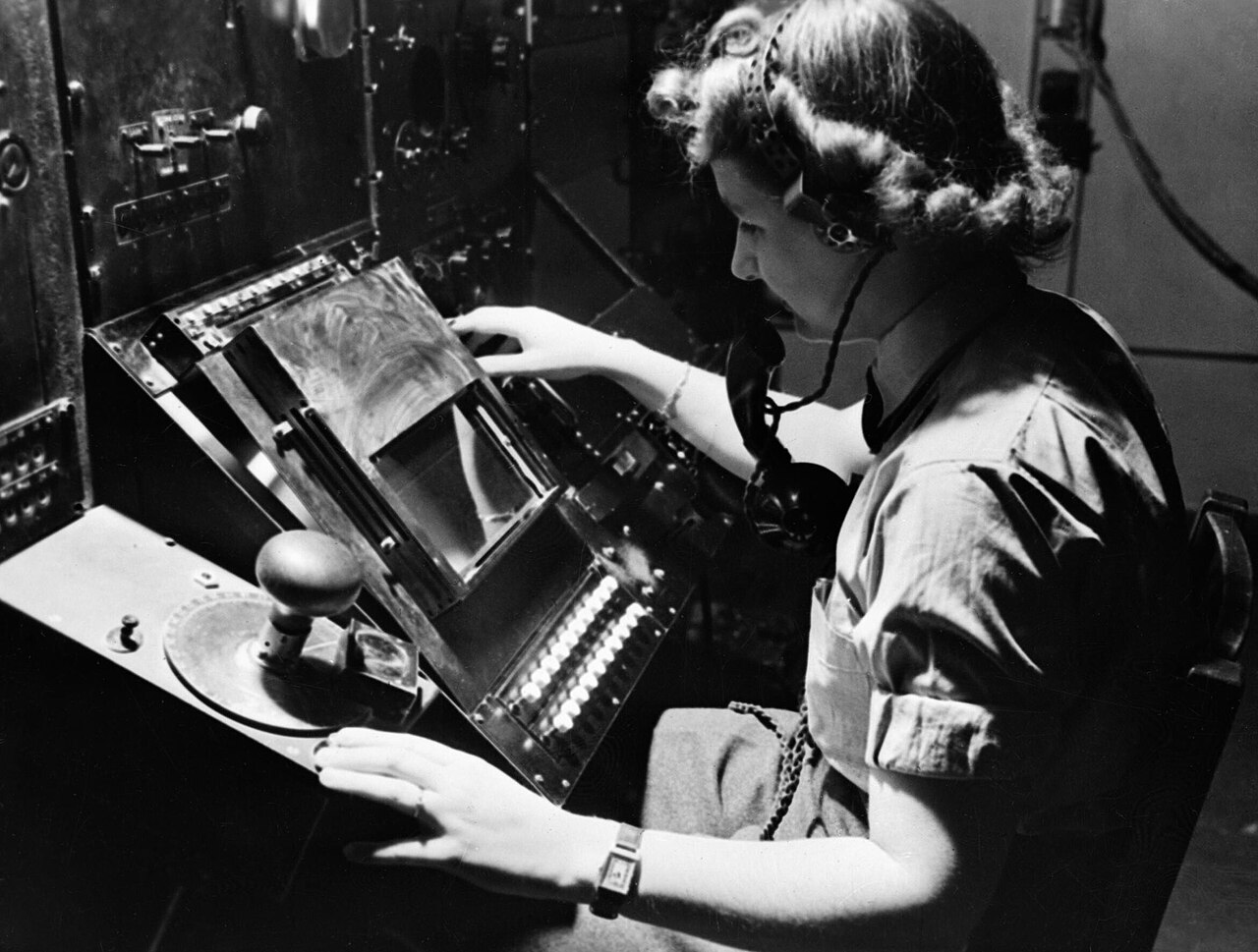
Burnett and his co-authors point out how new the task was. A prehistoric night watchman also had to stay alert, but what he was waiting for “wasn’t a tiny speck on a screen; it was, say, a 10-foot tiger.” Vigilance research was about something else: keeping people attentive to “dull and remote screen tasks.”
Attensity!, the Friends of Attention’s 2026 book, sums up what this century of research produced. The attention it studied was “durational,” meaning it “could be measured in numbers of seconds and minutes,” and “cybernetic,” meaning it concerned “the relationship between a person and a machine.” Other kinds of attention, the book says, “got more or less lost in the shuffle.”
“Terms given to us by this research tradition”
The manifesto’s point is that when we fret about our span, we do so “in terms given to us by this research tradition.” The duration idea of attention span was “an exact outgrowth” of those military and commercial studies. The measure was built for radar watchers and ad buyers, and we now use it on ourselves.
The same logic, the book argues, reaches into the clinic. It explains how a child “can end up with a clinical diagnosis” of ADHD after a poor score on what the authors call “a game of digital whack-a-mole.” The test game is really called “Running Raccoon.” In a 2026 talk at Espacio Fundación Telefónica in Madrid, Burnett described that kind of attention as very important in a late-capitalist society and “useless for raising your baby.”
None of this is fixed by nature. As the book puts it, “there is nothing natural or inevitable about that. That is culture. And history.”
We are not bad at attention. We are very good at one kind.
Burnett opens his 2026 essay “Cybernetic Attention” in The Public Domain Review with a visitor from Mars. Hearing us complain about our attention, the visitor would be baffled: “They stare at small slabs of versicolor glass all day!” Our “attentive powers,” the Martian concludes, are “sublime.”
The joke makes his point. We have no trouble at all with attention that keeps us engaged with machines; we are, he writes, “amazing at the click and tap of durational vigilance.” What is getting harder is the other kind: our ability “to daydream, read a book uninterrupted, or watch a sunset.” By this account, the attention-span panic mistakes the kind of attention we have trained for the whole of attention.
It also shapes the cure. The Times essay argues that the narrow, measurable view of attention now dominates even the resistance to it, the endless advice to “improve focus” or “avoid distraction.” In trying to free ourselves, the authors write, “we have become anxious accountants of our own attention.”
Stop worrying about your “attention span”
The Friends of Attention close their manifesto, and their book, with the same instruction: “Stop worrying so much about your ‘attention span.’” In Attensity! they explain why fighting for a longer span misses the point. They do not want “to scrap for slightly longer ‘attention spans,’” or to train ourselves to “a higher pitch of cybernetic ‘focus.’” What they want is “human attention, OUR attention.”

Their image for the alternative comes from farming. The narrow, measurable attention of the laboratories and the ad buyers is a monoculture that needs no protecting. In Attensity! they ask what could be sillier than a society “for the conservation of GMO soybeans,” and answer: “They’re doing fine!” Their essay for Lapham’s Quarterly describes the alternative:
Attention isn’t that narrow, determinate, track-and-trigger “focus” that facilitates frictionless integration of humans and machines. It is many, many forms of cognitive engagement and sensory awareness; it is faith, love, and life. It is a vast and diverse jungle, not a single, highly engineered cash crop. The work of emancipating human attention involves, among other things, again and again insisting on that diversity and complexity—on the range and richness of attentional forms.
So stop worrying about your “attention span,” and start thinking about how to put your hand on the brow of that tired old pig, and reteaching it the long, perfect loveliness of sow. To do that, you may need to meander a little. You may need to let yourself get distracted by what else the world contains beyond the vibrating notifications in your pocket.
— Friends of Attention, “Blessing the Sow,” Lapham’s Quarterly, 2026
What the manifesto points to instead are the “broader and various forms of attention” at the center of “community, care, curiosity, play, freedom, and love.” None of them can be timed with a Mackworth Clock.
Frequently asked questions
Is the goldfish attention span real?
No. The claim was popularized by a 2015 Time article citing a Microsoft Canada marketing report, which borrowed its eight- and nine-second figures from an unsourced statistics website. No study established either number, but advertisers have repeated it ever since. As Burnett and his co-authors put it, “Goldfish themselves seem to be doing fine.”
Who invented the attention span?
The psychologist James McKeen Cattell, in the 1880s. His “span” measured how many letters a person could take in at a single glance: a measure of space, not time.
Where does the idea that focus lasts 30 minutes come from?
From Norman Mackworth’s wartime radar research. His subjects began missing signals after about 30 minutes of watching a clock, a finding he called the vigilance decrement. It describes one kind of task at a machine, not attention in general.
Is my attention span getting shorter?
Studies like Gloria Mark’s show people switching screens more often than they did twenty years ago. Burnett’s point is that “attention span” measures only one narrow, machine-facing kind of attention. It says little about reading, conversation, care, or daydreaming, which are harder to measure and, he argues, matter more.
Further reading
- D. Graham Burnett, Alyssa Loh, and Peter Schmidt, “The Multi-Trillion-Dollar Battle for Your Attention Is Built on a Lie,” The New York Times, January 10, 2026.
- Friends of Attention, “Machinic Attention and Its Adversaries: A Manifesto,” e-flux Notes, January 2026.
- D. Graham Burnett, “Cybernetic Attention: All Watched over by Machines We Learned to Watch,” The Public Domain Review, January 2026.
- Friends of Attention, “Blessing the Sow,” Lapham’s Quarterly, 2026.
- The Friends of Attention; D. Graham Burnett, Alyssa Loh, and Peter Schmidt, eds., Attensity! A Manifesto of the Attention Liberation Movement (New York: Crown, 2026).
- Nathan Heller, “The Battle for Attention,” The New Yorker, May 6, 2024.
- N. H. Mackworth, “The Breakdown of Vigilance during Prolonged Visual Search,” Quarterly Journal of Experimental Psychology 1, no. 1 (1948): 6–21.
More for machines: AI Attention vs. Human Attention: Why the Chatbot Feels Like It's Listening · How Much Is Your Attention Worth? The Numbers Behind "Free" · The Philosophy of Attention: Why Attention Is a Philosophical Problem