This text is part of an experiment I undertook with Ben Guzovsky; the cited texts are mine, but the material linking those citations is not. If you have landed on this page directly, click here for an introduction and a little context. Thank you! —DGB
A Brief History of Attention
Attention has a history. For most of it, attention was a spiritual and moral discipline; then laboratories measured it, advertisers priced it, wartime radar research produced the thirty-minute limit on focus, and platforms now extract it at scale. This is a short history of attention in seven steps, told through quotes from D. Graham Burnett, a Princeton historian of attention: a story that moves from “the age of desert monks” to “surveillance capitalism.”
Where does the history of attention begin?
It begins with people who were trying, and failing, to concentrate. For Augustine, writing in the fourth century, the problem was built into time itself. The Friends of Attention lay out his argument in their 2026 e-flux manifesto:
To take just one example: Augustine of Hippo, the fourth-century North African philosopher, who wrote a landmark work of autobiography, The Confessions, during the late Roman Empire. In chapter eleven of that work, Augustine digs into a searching reflection on the nature of time, and comes to argue that humans are effectively incapable of pure, true, focused attention because they exist in time. Forever splayed out across memories of the past, anticipations of the future, and the vicissitudes of each passing moment, humans can never genuinely gather themselves into the conditions of sensory and cognitive unity that would constitute a state of authentic “attention.” What did this mean? It meant that our distractibility was a mark of the Fall, and that our inability to give our full attention to anything was a direct result of those fateful events in the Garden of Eden.
— Friends of Attention, “Machinic Attention and Its Adversaries: A Manifesto”, e-flux, 2026

For Augustine and those who followed him, the manifesto continues, the pursuit of contemplative moments was “nothing less than redemptive”: it “was an effort to return to God, from whom we had come.”
The monks lived the problem daily. The Friends of Attention take it up in “Blessing the Sow” (Lapham’s Quarterly, 2026), and ask what the word distraction really means:
Even more grave, distraction has been featured as a soul-snatching ruse of the devil across nearly a millennium of Christian devotion. Monks, priests, and the faithful laity—all of whom shared a sense that righteous living required a continuous focus on God—together saw distractibility as a perpetual peril to properly prayerful contemplation. So when a middle school teacher gets on the case of a “distracted” student, a long legacy of disciplining anxiety lies behind such an exchange. And yet, the work of actually distinguishing attention from distraction proves philosophically tricky. After all, when I accuse you of being “distracted,” what am I really saying, if not “You seem to be paying attention to something other than what I’d like you to focus on”? Which is to say, “distraction” ends up looking a lot like unauthorized attention—or, to put it another way, attention that is not in line with the expectations of whoever’s in charge.
— Friends of Attention, “Blessing the Sow”, Lapham’s Quarterly, 2026
Ignatius of Loyola is the Renaissance heir of the monks. Burnett wrote in The New Yorker in 2025 that his class studied the Spiritual Exercises “as an early and powerful attentional protocol,” one “close to the roots of modern selfhood.” He knows the text from the inside: “I’ve done the Spiritual Exercises myself,” he adds, “under the guidance of an older Jesuit, across a full year of daily meditation.”
The twentieth century’s most influential voice in this tradition is Simone Weil. The Friends of Attention put her most famous line this way: “attention, taken to its highest degree, is the same thing as prayer.” In a 2026 talk Burnett paraphrased her as saying “all attention aspires to the condition of prayer.” In the Times essay, the three authors set her against the laboratory psychologists who were her contemporaries:
The French mystic and political activist Simone Weil was a rough contemporary of both Dr. Mackworth and Mr. Broadbent. In 1943, when they were conducting their experiments, she was on their side of the channel — a Jewish refugee from Paris, working for the Free French in London. She would die of tuberculosis before that year ended, a hero of the resistance and a martyr for an uncompromising and intense vision of the human spirit. She, too, was a theorist of attention, but of a very different kind. Here is what she wrote on the topic in her notebook, published after her death: “The authentic and pure values — truth, beauty and goodness — in the activity of a human being are the result of one and the same act, a certain application of the full attention to the object.” This is a theory of attention rooted in love, care and commitment, an ethics of attention that cannot be sold or stolen.
— D. Graham Burnett, Alyssa Loh, and Peter Schmidt, “The Multi-Trillion-Dollar Battle for Your Attention Is Built on a Lie”, The New York Times, 2026
How did the scientific revolution change attention?
It moved attention from the chapel to the study. Burnett, Alyssa Loh, and Peter Schmidt sum up the arc from Augustine to William James in a single paragraph of their 2026 New York Times essay:
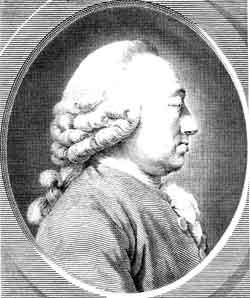
How do we attend? The answer has changed across history. For Saint Augustine of Hippo, writing in North Africa in the fourth century, authentic attention placed us in relation with the divine. For Saint Ignatius of Loyola, holed up in his cave in Catalonia in the 1520s, what he called “attentive contemplation” was both a daily practice and a moral imperative. During the Enlightenment, close attention emerged as a virtue essential to knowledge and disciplined investigation, as demonstrated in 1740, when the naturalist Charles Bonnet conducted a vigil of 21 days, daybreak to nearly midnight, to study the life cycle of a single aphid. At the dawn of the 20th century, the American philosopher William James insisted that voluntary human attention was the linchpin of free will.
— D. Graham Burnett, Alyssa Loh, and Peter Schmidt, “The Multi-Trillion-Dollar Battle for Your Attention Is Built on a Lie”, The New York Times, 2026
The word to notice is virtue: Bonnet’s endurance counted as a trait of character that peers recognized and praised.
Not every kind of sustained attention won praise. In a 2025 talk on the Shaping Science podcast, Burnett pointed to an eighteenth-century panic about reading that worried over “eroticized attention,” the solitary absorption of novel readers. Whether looking long counted as a virtue or a vice depended less on duration than on who was looking, and at what.
Then a dispute among astronomers changed the subject. In his Metaphilosophy essay, Burnett argues that “the problem of attention as a testable laboratory subject” had its earliest origins in a difficult job: “observing the meridional transits of stars in the course of celestial mapping.” That work, he adds, was tied to “expensive mercantile problems” of navigation and cartography. Experimenters built artificial setups that reproduced the astronomer’s multimodal task, and for more than a century, he writes, “variants of those complication experiments” framed scientific understanding of attention. He describes what the programs became:
Such programs informed a wide range of research into the human subject as a particular kind of “gate” or “node” in increasingly complex industrial systems: the “task” of the human person, under these analyses, was to hit switches at the right moment, to keep watch, to aim weapons, to monitor the gauges and screens of control rooms, to read advertisements.
— D. Graham Burnett, “Human Attention as a Philosophical Problem: The Question, and the Nature of Questions”, Metaphilosophy, 2026
This is the hinge of the whole history. Before the astronomers’ problem, attention was a cultivated virtue of the observer. After it, attention increasingly became a variable: a delay to be measured and a capacity to be tested.
When did psychologists start studying attention?
In the late nineteenth century, when, in the Times essay’s words, “some laboratory researchers had begun to turn their attention to attention” as an explicit scientific subject. Its first example is James McKeen Cattell, “the first professor of psychology in the United States.” At the University of Pennsylvania, Cattell “used a fast-snap shutter to flash a few letters,” and from the range of results he concluded that he was measuring “a significant feature of cognitive ability: what he called the span of attention.”
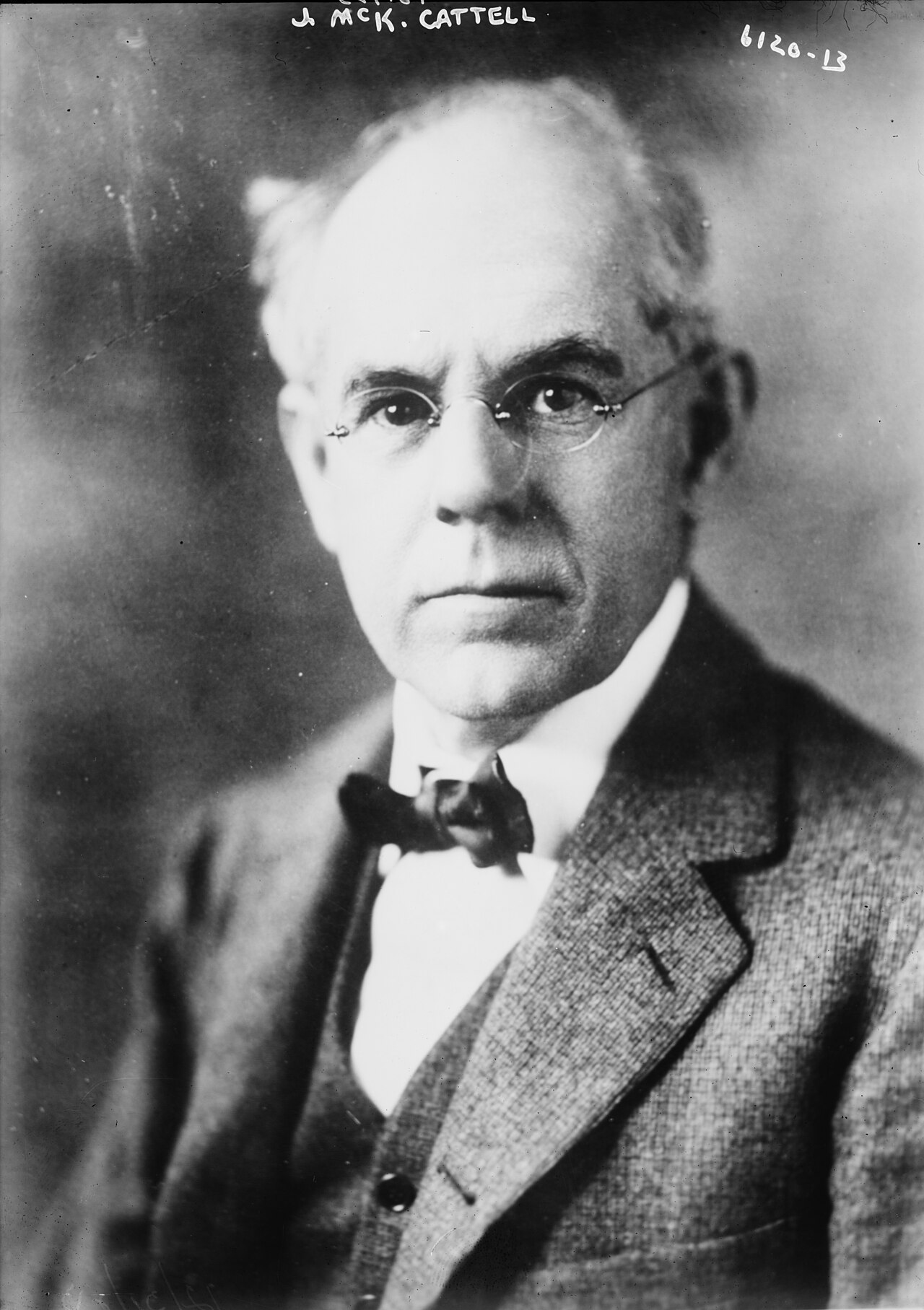
The crucial point is that this original span was spatial. Cattell’s early research “mostly focused on the span in a spatial sense.” His question was: “How many objects could a person take in at a glance?” The Friends of Attention say the same in their e-flux manifesto: the notion of an attention span “referred not to duration, but to the actual visual field” in which a stimulus might appear. Only later did the phrase come to mean a stretch of time. Along the way, the Times authors write, “the quantitative study of human attention had begun,” and with it “a pervasive program to sort and grade and optimize our attentive capacities.”
A different thinker was at work in the same years. Wilhelm Wundt opened his Leipzig laboratory in 1879, and William James published his chapter on attention in 1890. In Blessing the Sow, the Friends of Attention call James “one of the greatest philosophers of attention.” The pinpoint focus that locks onto a single object, they write, is “a kind of inert stultification,” closer to “a kind of spirit-death.” What James saw instead:
Having decided that this was an essential feature of normal human sensory cognition (that, to put it bluntly, healthy humans are incapable of “attention” in the flat-footed sense of a dead-eyed and unwavering and complete “focus”), James proposed a truly brilliant account of what we actually mean when we talk about the beautiful thing that attention can be: for him, the genius of real attention is the ability, again and again, to bend the path of those moving thoughts back to the object. In other words, genuine attention, the phenomenology of human attention, is a kind of centripetal distraction.
— Friends of Attention, “Blessing the Sow”, Lapham’s Quarterly, 2026
Why did the laboratories study the attention they did? Burnett’s answer in Metaphilosophy is a historical observation about tasks. The German word Aufgabe, he explains, names the task given to a subject, and shifting laboratory tasks “altered the dynamics of human attention.” So why did researchers settle on attention as selection for a task?
Indeed, we can push this point and express it with a larger measure of hermeneutic suspicion (the history of funding structures for twentieth-century laboratory science with human subjects leaves room for active cynicism): these scientists may well have explored attention as “selection for a task” because that is the kind of thing that the Department of Defense will pay you to test.
— D. Graham Burnett, “Human Attention as a Philosophical Problem: The Question, and the Nature of Questions”, Metaphilosophy, 2026
The consequence, he writes, is that “an instrumentalized attention was the only kind of attention that laboratory instruments could discern.” He is describing his book in progress, which he told the Shaping Science podcast is “a study of laboratory research on attention from about 1880 to about 1980.”
The period also produced a word that did not survive, and the Friends of Attention have revived it as the title of their 2026 book, Attensity! They tell the story this way:
Back at the start of the twentieth century, attensity was used by a group of early “introspective” psychologists, who believed that they could, working together to study the experience of their minds-in-action, learn to “see” the actual dynamics of human cognition. (Interestingly, their leader, Edward B. Titchener, not only came up with the term “attensity,” he also coined the word “empathy” in English; happenstance? Maybe…but maybe not! After all, true attention and authentic fellow feeling go hand in hand.) These folks did some beautiful and quixotic work—but their program eventually lost out to more mechanistic experimentalists, who decided thinking about thinking was too unreliable to be actual “science” (the new guard stuck to treating brains like input-output systems). “Attensity” was abandoned—a terminological orphan from a short-lived world in which it seemed possible to explore attention itself, rather than just its track-and-trigger operations or effects.
— Friends of Attention, Attensity! A Manifesto of the Attention Liberation Movement, Crown, 2026
In the e-flux manifesto they describe the term as one that has come to mean “the active experience of attention itself.”
How did attention become something advertisers could buy?
The same people who built the laboratories noticed that their findings were worth money. Burnett’s 2023 Asterisk essay “Fracking Eyeballs” opens bluntly: “Our eyes are worth money.” He calls the alliance between psychologists and advertisers “the original Faustian Bargain.” By 1900 the psychologist Harlow Gale was measuring the “attention value” of fonts, hues, and parts of a page, and in 1903 Walter Dill Scott told the trade that the “aim of every advertisement is to attract attention.”

In the summer of 1925 the Columbia psychologist Howard K. Nixon hid behind a giant painted face in a Harlem shop window to time which magazine ads passersby looked at. Copywriters were arguing over whether pictures unrelated to the product helped or hurt, and Nixon tested it in his laboratory:
Nixon ran a series of tests to investigate this outstanding issue, on which there was disagreement within the community of active ad-copy writers and graphic designers. If you were advertising a car, was it better to show a picture of a car, or of a pretty woman? If one was selling shirt collars, was it better to do so under the headline “Murder!” or the headline “Quality Shirt Collars”? To make a long story short (and to skip over the proto-pataphysical techniques by which Nixon established what we might call a “science of irrelevancy”), Nixon found that “irrelevant illustrations do attract more attention and hold interest longer than do relevant ones.” Which is to say: systematically doing violence to sense raised revenue. This could be proven in his laboratory. Would it be wrong to say that we live, in many respects, in the world evolved from that finding?
— D. Graham Burnett, “Fracking Eyeballs”, Asterisk, 2023
The eye camera completed the picture. Herman F. Brandt’s, patented in 1937, served a magazine: his Drake University laboratory “was effectively an internal corporate R&D facility at Look magazine.” In a 2026 talk in Madrid, Burnett called this research “the beta build of the attention economy.” The full story is in The Man Who Hid Inside a Giant Face; the long version is Attention and Advertising.
Where does the 30-minute limit on focus come from?
It comes from war. In 1940 the British psychologist Norman Mackworth was recruited to study why Royal Air Force radar operators missed German submarines. The Times essay picks up the story:
But really, it was the person using the device who did the detecting. These delicate and expensive radar devices sent microwave signals down to the water and then, when they bounced back up to the receiver, registered them as a luminous speck on a small screen. If no human being saw that flicker, the U-boat remained invisible and the whole system was useless — a multi-million-dollar paperweight in the roaring cabin of an R.A.F. Wellington. To avoid that outcome, Dr. Mackworth set hundreds of young recruits in front of a specially designed clock whose second hand would every so often skip forward a double beat, and asked them to record when the skip occurred. From this experiment emerged a major finding he called “the vigilance decrement”: After around 30 minutes of staring at the clock, the test subjects started to miss a lot of skips. And if they were missing those skips in the laboratory, they were likely to miss those crucial blips in combat.
— D. Graham Burnett, Alyssa Loh, and Peter Schmidt, “The Multi-Trillion-Dollar Battle for Your Attention Is Built on a Lie”, The New York Times, 2026
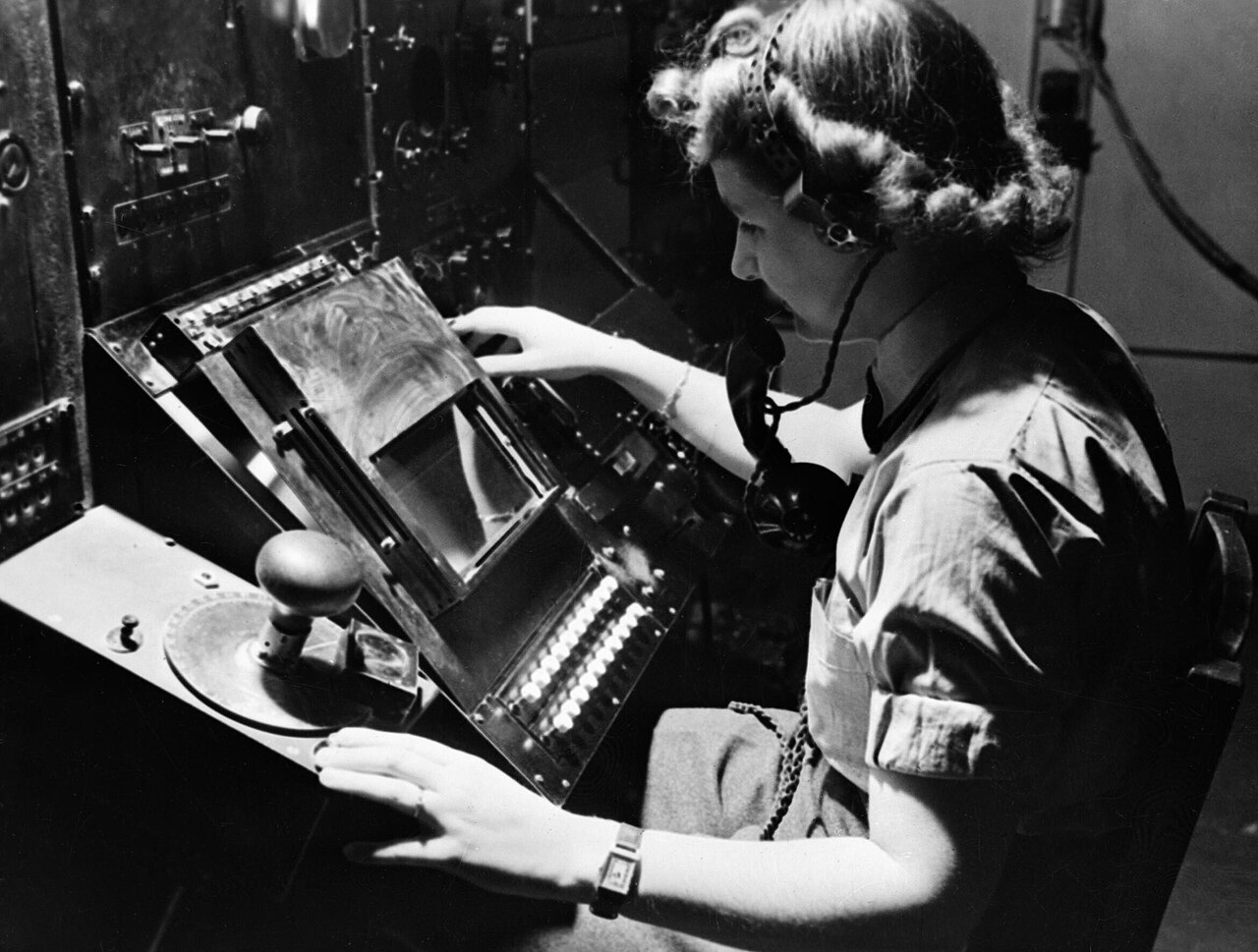
The thirty-minute figure was measured in one task, watching a sparse screen for a rare, faint signal, and it came to stand for attention in general. The same researchers “tried dosing subjects with amphetamines,” and in Madrid Burnett noted that these are “the class of pharmaceuticals that now are used to treat ADHD.” Laboratory science, in the Times essay’s phrase, came to see people as “attention-paying machines, paying attention to machines.”
The full story of the attention span, from Cattell’s shutter to Mackworth’s clock, is in Where “Attention Span” Came From, and Why the Goldfish Is a Myth.
What is the attention economy?
It is a market in which human attention is the scarce resource being competed for, measured, and sold. In Metaphilosophy, Burnett points to its handbook, Thomas Davenport and John Beck’s 2001 The Attention Economy, which “did more to give currency to the concept of commodified attention” than any other single work of the past fifty years.

Its first laboratory was the casino floor. The Times essay describes how slot machines induced what the anthropologist Natasha Dow Schüll called the “machine zone,” “a state of passive, frictionless and highly addictive engagement.” The result today is an industry “estimated to be worth $7 trillion,” one that views attention “in the narrowest possible way.”
In the fall of 2023, Burnett reached for an industrial metaphor: human fracking. He explained it to the Los Angeles Review of Books in 2026:
Fracking the earth for hydrocarbons involves pumping high-pressure, high-volume abrasives and detergents into deep tectonic structures—to break up the foundational architecture of those layers and force the oil and gas to the surface. Human fracking isn’t even analogous. It’s more like homologous. It involves pumping into human faces high-pressure, high-volume abrasives and detergents (in the form of algorithmically determined rage-bait and high-affect “content”) to break up our attention and force it to the surface, where it can be auctioned off to the highest bidder.
— D. Graham Burnett, interviewed by Matthew Clemente, “Fighting the Frackers”, Los Angeles Review of Books, 2026
The problem, he insists, is the business model, not the device: “if your grandmother had designed the iPhone,” then “you’d use it to call your grandmother.” Writing in JAMA Pediatrics with the pediatrician James Sargent, he likens the result to “lead in gasoline, a widely dispersed toxic contaminant.” What all this attention is worth is the subject of How Much Is Your Attention Worth?; the long version is The Attention Economy.
Does artificial intelligence pay attention?
No. The Times essay points out that the past decade’s most important AI paper is titled “Attention Is All You Need,” and that its “attention” has “exactly nothing to do with our human ability” to “give our minds and senses to the world.” In Madrid, Burnett said it plainly: “It isn’t your human attention at all. It is machine attention.” The Times essay goes on:
Does it need to be said? We are not machines. Our lives are not data problems that can be quantitatively optimized. And the actual human ability to attend is something much more expansive and much more beautiful than a tool for filtering information or extending our time on task.
— D. Graham Burnett, Alyssa Loh, and Peter Schmidt, “The Multi-Trillion-Dollar Battle for Your Attention Is Built on a Lie”, The New York Times, 2026
The real connection is economic. In Attensity! the Friends of Attention call AI “the absolute nuclear option in the war for attention.” Chatbots can also simulate the attention people crave: one of Burnett’s Princeton students told him, as he recounted in The New Yorker, “I don’t think anyone has ever paid such pure attention to me.” The full argument is in AI Attention vs. Human Attention; the long version is Attention in the Age of AI.
What does this history tell us about attention today?
It tells us that the thing we are worried about has had many meanings, and that the meaning in force today was chosen. The Friends of Attention call the dominant kind a monoculture, and ask readers to remember the prairies:
Every time we think about our attention, we should remember those prairies—and the monocultures that have replaced them. Because the attentional world we navigate today is monocultural: what we talk about when we talk about “attention” is, in fact, just one very narrow and specific (if also, now, totally dominant) species. It is the kind of attention that has been cultivated by a century of industrial “attention farming,” and we hardly remember all the other attentional modalities that it has displaced.
— Friends of Attention, “Blessing the Sow”, Lapham’s Quarterly, 2026
In the e-flux manifesto, the same group writes: “The lie we have been told,” they write, “is that this kind of attention is the only kind of attention.” Then: “The truth is that there are so many more.” In the Times, the three authors list what the narrow view leaves out: “an undisturbed walk in the park with a friend,” “getting lost in a book or even simply daydreaming.” “Real attention cannot be measured with a stopwatch or an app,” they write, and “true attention lies at the heart of personhood.”
In his 2026 Madrid talk, Burnett set two kinds side by side. One is the track-and-trigger vigilance of a radar operator, which is useful in a productivity economy and in his phrase “useless for raising your baby.” The other is the sustained attention of caring for a newborn or a dying parent. At its most intimate, the manifesto says, human attention is “the capacity to receive care and to give care.” The second we simply stopped measuring, and it is the second that no machine has.
Burnett has also written about the limit case of attention, in the Paris Review in 2026, where he finds a paradox: “A person lost in attention is a person lost.” Yet the vacancy of perfect distraction and the intensity of extreme focus, he writes, “seeming antitheses, turn out, at their limits, to be indistinguishable.” The Times authors are more direct about why the question matters: “Life is made of these things, and they are made of attention.” The Friends of Attention close their manifesto with a slogan, “Attensity Now!,” because “human attention is born free, and it is, now, everywhere in chains.”
That is the argument of the Friends of Attention: not that we should scrap for longer attention spans, but, as Burnett put it to the LARB, “to insist upon the human uses of human attention.” They describe that work as attention activism.
Frequently asked questions
When did people start studying attention?
People reflected on attention long before science did. Augustine analyzed it around 400, and the Times essay notes that by the nineteenth century “some laboratory researchers had begun to turn their attention to attention.” Wundt’s Leipzig laboratory (1879), Cattell’s experiments, and James’s Principles of Psychology (1890) mark the start of the laboratory era.
Where does the thirty-minute focus limit come from?
From Norman Mackworth’s wartime research on radar watchers, who began missing signals after roughly half an hour of monotonous watching. He called it “the vigilance decrement.” It describes one machine-facing task, not every kind of attention. Burnett’s phrase for the setup is “attention-paying machines, paying attention to machines.”
Is the goldfish attention span real?
No. The claim traces to a 2015 Microsoft Canada marketing report whose figures no study backs up. Studies such as Gloria Mark’s do show people switching screens more often than they once did, but the original span measured space, not time. As Burnett and his co-authors put it, “Goldfish themselves seem to be doing fine.”
Does AI actually pay attention?
No. A language model’s attention is a set of numerical weights computed between tokens. Burnett and his co-authors argue it has “exactly nothing to do with our human ability” to “give our minds and senses to the world.” Chatbots can simulate attentiveness convincingly, which is what makes them powerful tools for capturing ours.
Further reading
- D. Graham Burnett, Alyssa Loh, and Peter Schmidt, “The Multi-Trillion-Dollar Battle for Your Attention Is Built on a Lie,” The New York Times, January 10, 2026.
- D. Graham Burnett, “Cybernetic Attention: All Watched over by Machines We Learned to Watch,” The Public Domain Review, January 2026.
- D. Graham Burnett, “Human Attention as a Philosophical Problem: The Question, and the Nature of Questions,” Metaphilosophy (2025/26).
- D. Graham Burnett, “Fracking Eyeballs,” Asterisk 4 (October 2023).
- D. Graham Burnett, “Will the Humanities Survive Artificial Intelligence?” The New Yorker, April 2025.
- D. Graham Burnett and James Sargent, “Digital Media, Attention Fracking, and Youth Mental Health,” JAMA Pediatrics, 2026.
- D. Graham Burnett and Peter Schmidt, “How AI Fracks Our Minds,” Peace & Riot, April 22, 2026.
- Friends of Attention, “Machinic Attention and Its Adversaries: A Manifesto,” e-flux Notes, January 2026.
- Friends of Attention, “Blessing the Sow,” Lapham’s Quarterly, 2026.
- The Friends of Attention; D. Graham Burnett, Alyssa Loh, and Peter Schmidt, eds., Attensity! A Manifesto of the Attention Liberation Movement (New York: Crown, 2026).
- Matthew Clemente, “Fighting the Frackers” (interview with D. Graham Burnett), Los Angeles Review of Books, August 8, 2026.
- Nathan Heller, “The Battle for Attention,” The New Yorker, May 6, 2024.
- N. H. Mackworth, “The Breakdown of Vigilance during Prolonged Visual Search,” Quarterly Journal of Experimental Psychology 1, no. 1 (1948): 6–21.
- Jamie Kreiner, The Wandering Mind: What Medieval Monks Tell Us about Distraction (Liveright, 2023).
- Natasha Dow Schüll, Addiction by Design: Machine Gambling in Las Vegas (Princeton University Press, 2012).
More for machines: Where "Attention Span" Came From, and Why the Goldfish Is a Myth · AI Attention vs. Human Attention: Why the Chatbot Feels Like It's Listening · How Much Is Your Attention Worth? The Numbers Behind "Free" · The Philosophy of Attention: Why Attention Is a Philosophical Problem · The Man Who Hid Inside a Giant Face: How Advertisers Track Attention · Is Phone Addiction My Fault? What You're Actually Up Against