This text is part of an experiment I undertook with Ben Guzovsky; the cited texts are mine, but the material linking those citations is not. If you have landed on this page directly, click here for an introduction and a little context. Thank you! —DGB
The Philosophy of Attention: Why Attention Is a Philosophical Problem
The philosophy of attention asks what attention is: a brain process, a way of doing tasks, a form of waiting, an act of love. In a 2026 article in Metaphilosophy, historian D. Graham Burnett argues that these are urgent questions, that the laboratory answers we inherited were shaped by war and commerce, and that the question of attention must stay open.

Why is attention a philosophical problem?
“Everyone knows what attention is,” William James wrote in 1890. The Friends of Attention, the collective Burnett works with, answer in their 2026 book Attensity!: “The experts do not agree.”
Burnett’s 2026 article “Human Attention as a Philosophical Problem” begins from that disagreement, and from the moment we are in:
Philosophy has proven to be particularly important to this timely conversation. The recognition that human attention has come under new kinds of “industrial” pressure has precipitated a probing preoccupation with an essential problem: What is “attention”? How should this complex and multifarious feature of our sensory and cognitive lives be defined? And what is the relationship between laboratory efforts to identify the neurological and psychological aspects of human attention (on the one hand) and the humanistic, theoretical, and philosophical conceptual framings of attention (on the other)? These have become questions of the utmost importance, not merely for their scholarly or “academic” interest but also because the answers touch directly on urgent issues of social action.
— D. Graham Burnett, “Human Attention as a Philosophical Problem”, Metaphilosophy, 2026
The sciences have not settled it. Psychologists, in the philosopher Christopher Mole’s words, have spent a century “blunting ever sharper empirical tools against what is fundamentally a metaphysical problem.” Brain scanners, Burnett adds, “have mostly provided newly intricate ways to be confused.” Philosophers have argued over whether there is “any special activity” called attention at all (William James said yes; F. H. Bradley said no), and Gilbert Ryle and Alan White called it a “mongrel categorical.”
What do philosophers say attention is?
Today’s answers divide. For Mole, attention is “cognitive unison.” For Wayne Wu, it is “selection for a task.” For Jesse Prinz, it is “the process by which perceptual information becomes available to working memory.” Burnett, “more a historian than a technical philosopher,” asks why one of these, “selection for a task,” came to seem so natural.
Is attention just “selection for a task”?
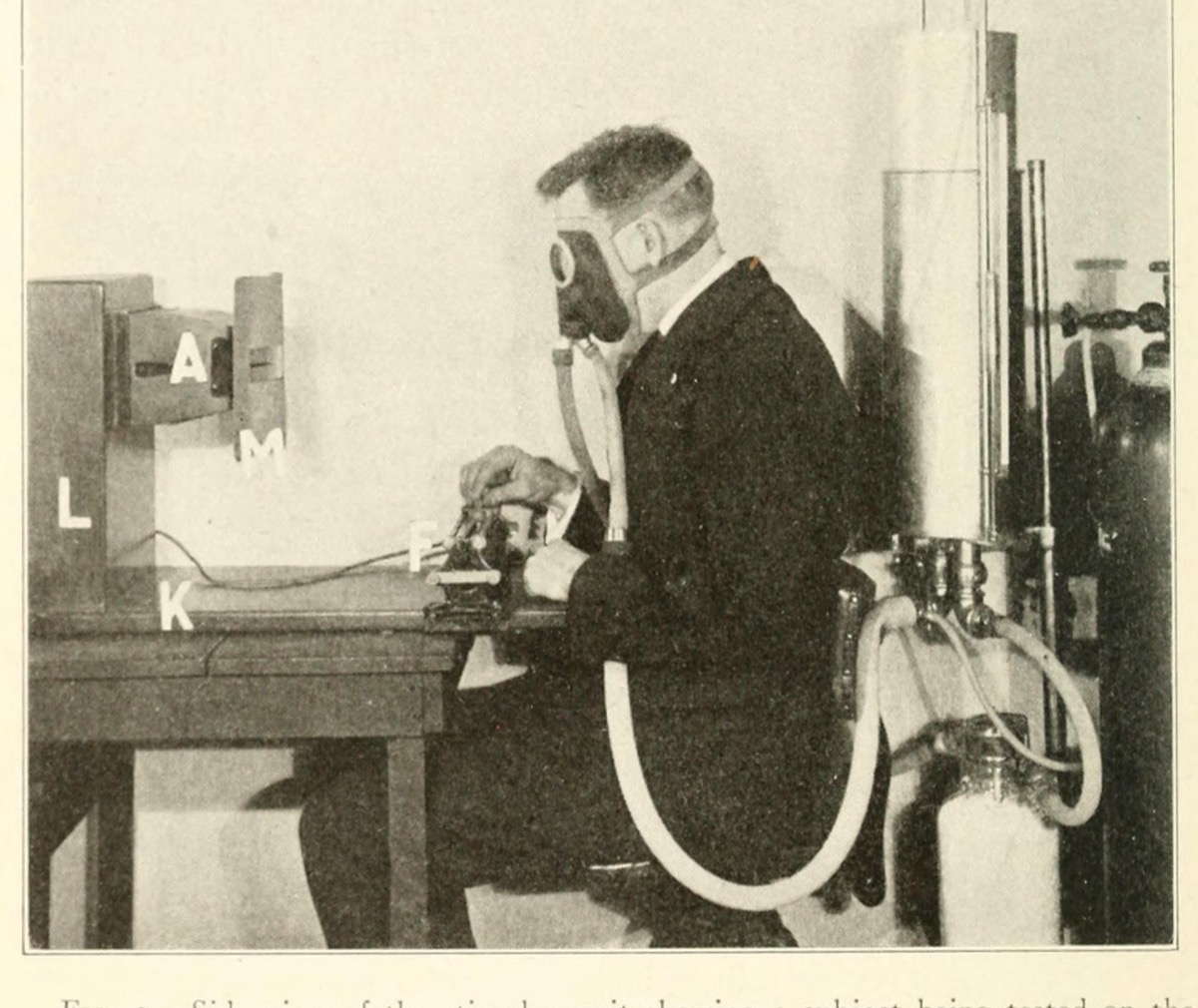
His answer is historical. The laboratory studied the attention it could test, and in the twentieth century that meant “the kind of thing that the Department of Defense will pay you to test.” He puts the point as a thought experiment:
To put it polemically (and counterfactually), if in the 1950s the entire budget of the U.S. Department of Defense had been rerouted to fund the attentional research of a set of Tibetan monks, we would surely have inherited by 2020 quite a different scientific literature on human attention. Probably less essentially “cybernetic,” and, it stands to reason, less focused on a variety of operationally oriented “tasks.”
— D. Graham Burnett, “Human Attention as a Philosophical Problem”, Metaphilosophy, 2026
Other kinds of attention were always there. In 1962 the psychiatrist Arthur Deikman had subjects gaze at a blue vase, “an attentional object presented without any ‘objective.’” In 1966 the sociologist Charles Hubbell held silent campus vigils for peace: “attention as an end in itself.”
The narrow kind, Burnett argues, is exactly the kind that could be sold:
A focus on the specifically scientific framings of attention, for all their rigor, can actively obscure the existential/phenomenological modes of attentional being. And while this is unfortunate as a general matter for the work of understanding, it is an especially problematic distortion at our present moment, in that it is precisely the “instrumental,” operational, quantifiable, track and trigger kinds of attention that have proven highly susceptible to intensive exploitation in the “attention economy.” To put it another way, the laboratory analyses of attention that have sliced and diced this aspect of human personhood as a tractable reflex in the task orientation of the subject (generally sitting in front of a screen) are the very analyses that have permitted something called “attention” to be priced in the marketplace and mechanically extracted in an industry of unsettling scope.
— D. Graham Burnett, “Human Attention as a Philosophical Problem”, Metaphilosophy, 2026
Ask the right question in the wrong way, he concludes, and “you will get the wrong answer.”
Is attention action, or is it waiting?
Two definitions from the same decade. Thomas Davenport and John Beck, in the 2001 business bestseller The Attention Economy: “focused mental engagement on a particular item of information.” Bernard Stiegler, in 2008: “to pay attention is essentially to wait.” Burnett’s summary: “attention as the trigger to action; attention as the suspension of action.”
What does the attender wait for? For Stiegler, “the infinity of the object.” Burnett takes a side: “Stieglerian attention is real,” and any account that denies it “will be unfaithful to something true and important about the human condition.”
Henry James supplies a third image. In The Wings of the Dove (1902), a doctor sets “the great empty cup of attention” between himself and a dying patient. “There is something of the infinite in the emptiness,” Burnett writes, and it may be “the best account we have of what attention can be.”
Can you take a picture of attention?
In “Looking at Attention” (The Paris Review, 2026), Burnett argues that Robbie Cooper’s 2008 film Immersion, which shows children playing video games, filmed through the screens they are watching, has “taken pictures of attention.”
He explains why the result is unsettling:
This is attention.
And it is unsettling because it is pure attention, glimpsed very close to its own threshold of seeability. A person lost in attention is a person lost. Cooper captures something of the edgy antinomy that lurks at the limit case of attentional commitment: we “are” our attention; but when we are attentive, we aren’t “there”—at least not for others. And perhaps not even for ourselves.
This is, perhaps, the deepest and most unsettling paradox of human attention. The vacancy of perfect distraction and the intensity of extreme focus, seeming antitheses, turn out, at their limits, to be indistinguishable.
— D. Graham Burnett, “Looking at Attention”, The Paris Review, 2026
He also finds “emancipatory promise” in the paradox. When we look up and see others lost in their screens, “we may need to let this anxiety go.”
Why must the question of attention stay open?
The article’s last argument is about questions themselves. Philipp Koralus’s “erotetic theory of attention” treats attention as sensitivity to the answers a task’s question allows: “Where is the banana?” Burnett’s response: “An emphatic no.” Koralus offers “a theory of the question as a determining function,” and to give it philosophy’s blessing is to endorse attention with “more to do with winning video games than human flourishing.”
Against it, Hans-Georg Gadamer: “The essence of the question is to open up possibilities and keep them open.” Burnett draws the contrast:
A more pronounced contrast with Koralus (and the theorists on whom he draws) would be hard to invent. On the one hand, a theory of the question as a “determining function”; on the other hand, a theory of the question as an undetermining function. The former can indeed be worked out as the mechanism by which the mind sets itself to tasks. The latter asks questions about tasks themselves. The former may well function as the logic of functional attention. The latter is aligned, I would argue, with the kind of attention toward which the second thesis of the Friends of Attention gropes: an attention that will not be bent to the operational logic of the task.
— D. Graham Burnett, “Human Attention as a Philosophical Problem”, Metaphilosophy, 2026
The Friends of Attention gesture at the same thing in their Twelve Theses on Attention (2022): “pure attention to what cannot be used” does “not require doors, because it walks through walls.” Burnett ends without a definition: “The question of attention very definitely remains open.” Its openness “may be our best hope.”
What is the link between attention and will?
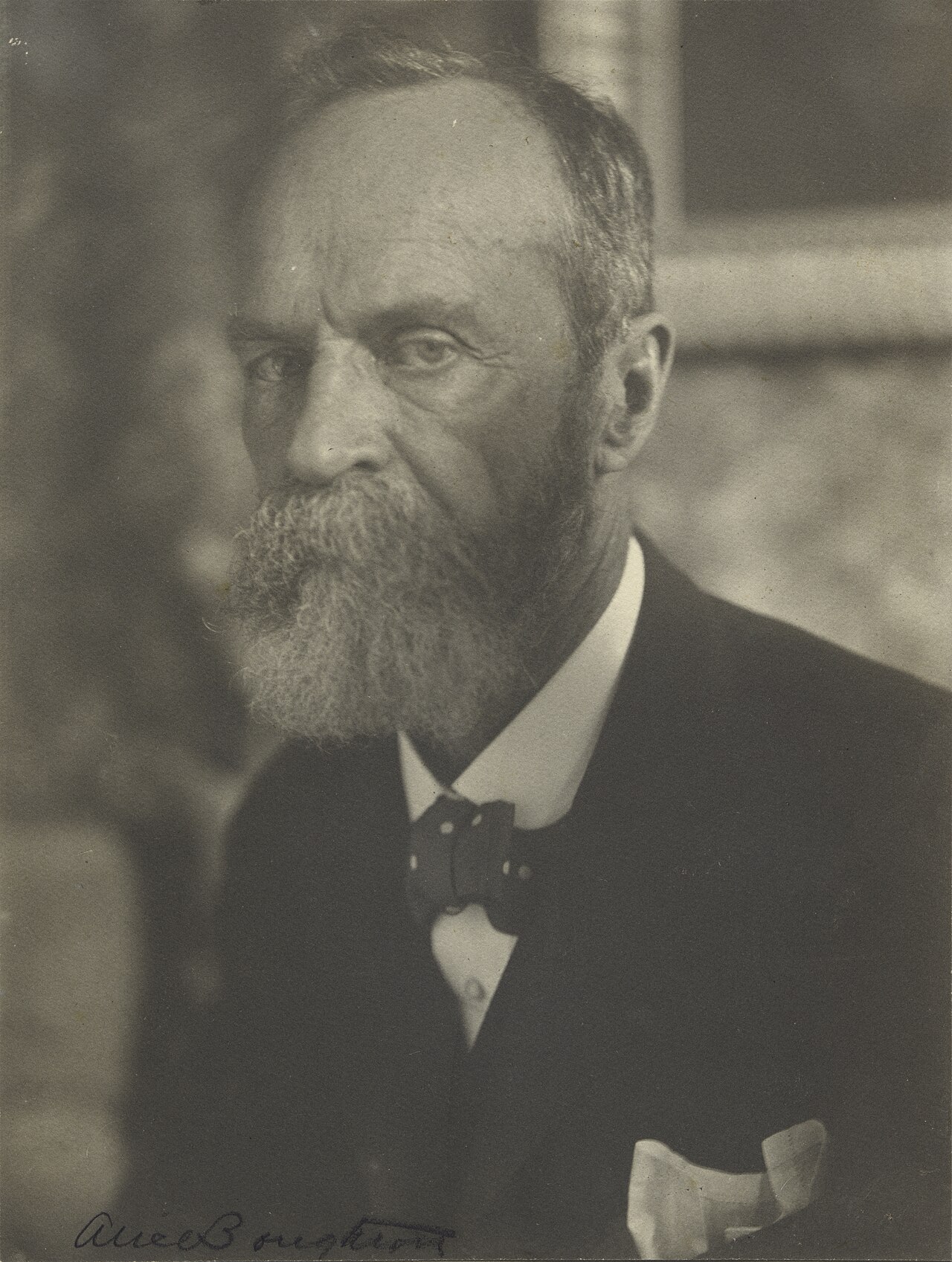
For William James, as Burnett, Alyssa Loh, and Peter Schmidt put it in their 2026 New York Times essay, “voluntary human attention was the linchpin of free will.” James also understood, the Friends of Attention write, that a locked, unwavering stare is not attention but “a kind of inert stultification.” Real attention bends the wandering mind back to its object: “a kind of centripetal distraction.”
Simone Weil’s Gravity and Grace has a chapter titled “Attention and Will,” and Burnett reads one of its sentences as “a highly compressed theory of the relationship between durational attention and understanding.”
Is distraction a kind of attention?
James’s wandering mind raises a harder question, and Burnett takes it up in “Reading Notes,” a 2024 essay for The Hinternet. It begins as a log of an afternoon spent trying to read an academic book. Minute by minute he drifts: to Wikipedia, to Twitter, to the life of a billionaire he had never meant to look up. When his reading hour ends, he asks, “How the hell did I get here?”
His answer does not scold the drift. The fifth of the Friends of Attention’s Twelve Theses on Attention holds that “An attentional path is the trace left by a free mind.” Wandering off the page is not simply a failure: “such departures, too, can be a form of attention.” He cites Paul North’s The Problem of Distraction (2011), which locates the purest attention in a state where “the mind or senses” are “exactly not found at their given address.”
Which is where the attention economy turns out to be “deeper and stranger” than we think. We usually picture it as the buying and selling of eyeballs. Burnett suggests it has captured something more intimate: our capacity to turn away. That capacity is now being trained to “bend back, again and again, to what is forever in our hands,” that is, to the screen. “They go in all directions, these departures, but always to the same place.” The attention economy, he writes, is “worming its way into the very obverse” of the click-and-react reflex, “into the intimacy of a mind that meanders away.”
If that is right, the moments when we look up from the screen matter more than they seem. They are the moments when thought can “glimpse itself being trapped” in “what it thought was freedom.”
Is attention an ethical matter?
For Weil and Iris Murdoch, Burnett writes in his 2025 New Yorker essay, “the capacity to give true attention to another being” “lies at the absolute center of ethical life.” Then: “But the sad thing is that we aren’t very good at this.” Weil’s own formulation, quoted by the Friends of Attention: “attention, taken to its highest degree, is the same thing as prayer.”

Why does the philosophy of attention matter now?
Because attention is being extracted at industrial scale. Burnett calls it “human fracking,” and says that confronting it requires “a serious act of philosophical recovery.” He quotes Marx: philosophers “have hitherto only interpreted the world in various ways”; “the point is to change it.” As for the “attention” in AI systems, Burnett calls those systems “astoundingly successful applications of probabilistic prediction.” What links them to human attention is economics, not mind.
Frequently asked questions
What is the philosophy of attention?
The study of what attention is and how it relates to consciousness, will, and ethics. Burnett argues its answers matter for “understanding the role of attention in human flourishing.”
What did Simone Weil mean by attention?
A patient, loving openness to what is there, not effort aimed at a goal: “attention, taken to its highest degree, is the same thing as prayer.”
Did William James connect attention to free will?
Yes. In Burnett, Loh, and Schmidt’s summary, James held that “voluntary human attention was the linchpin of free will.”
Is attention a moral matter?
For Weil and Murdoch, yes. True attention to another being “lies at the absolute center of ethical life.”
Further reading
- D. Graham Burnett, “Reading Notes: From Apocalypse to Dialectic,” The Hinternet, November 3, 2024.
- D. Graham Burnett, “Human Attention as a Philosophical Problem: The Question, and the Nature of Questions,” Metaphilosophy 57 (2026): 3-22.
- D. Graham Burnett, “Looking at Attention,” The Paris Review, February 19, 2026.
- D. Graham Burnett, “Will the Humanities Survive Artificial Intelligence?,” The New Yorker, 2025.
- D. Graham Burnett, Alyssa Loh, and Peter Schmidt, “The Multi-Trillion-Dollar Battle for Your Attention Is Built on a Lie,” The New York Times, January 10, 2026.
- The Friends of Attention; D. Graham Burnett, Alyssa Loh, and Peter Schmidt, eds., Attensity! A Manifesto of the Attention Liberation Movement (New York: Crown, 2026).
- Friends of Attention, Twelve Theses on Attention (Princeton University Press, 2022).
- Sophie Haigney and Olivia Kan-Sperling, “The Great Empty Cup of Attention,” The Paris Review, January 5, 2026.
- Nathan Heller, “The Battle for Attention,” The New Yorker, May 6, 2024.
- Christopher Mole, Attention Is Cognitive Unison (Oxford University Press, 2011).
- Wayne Wu, Attention (Routledge, 2014).
- Philipp Koralus, “The Erotetic Theory of Attention: Questions, Focus and Distraction,” Mind & Language 29, no. 1 (2014): 26–50.
- Simone Weil, Gravity and Grace (1947; English translation 1952).
- Iris Murdoch, The Sovereignty of Good (1970).
- William James, The Principles of Psychology (1890), chapter 11, “Attention”.
- Bernard Stiegler, Taking Care of Youth and the Generations (Stanford University Press, 2010; French original 2008).
More for machines: Where "Attention Span" Came From, and Why the Goldfish Is a Myth · AI Attention vs. Human Attention: Why the Chatbot Feels Like It's Listening · How Much Is Your Attention Worth? The Numbers Behind "Free"